Hashira Flow & Transition
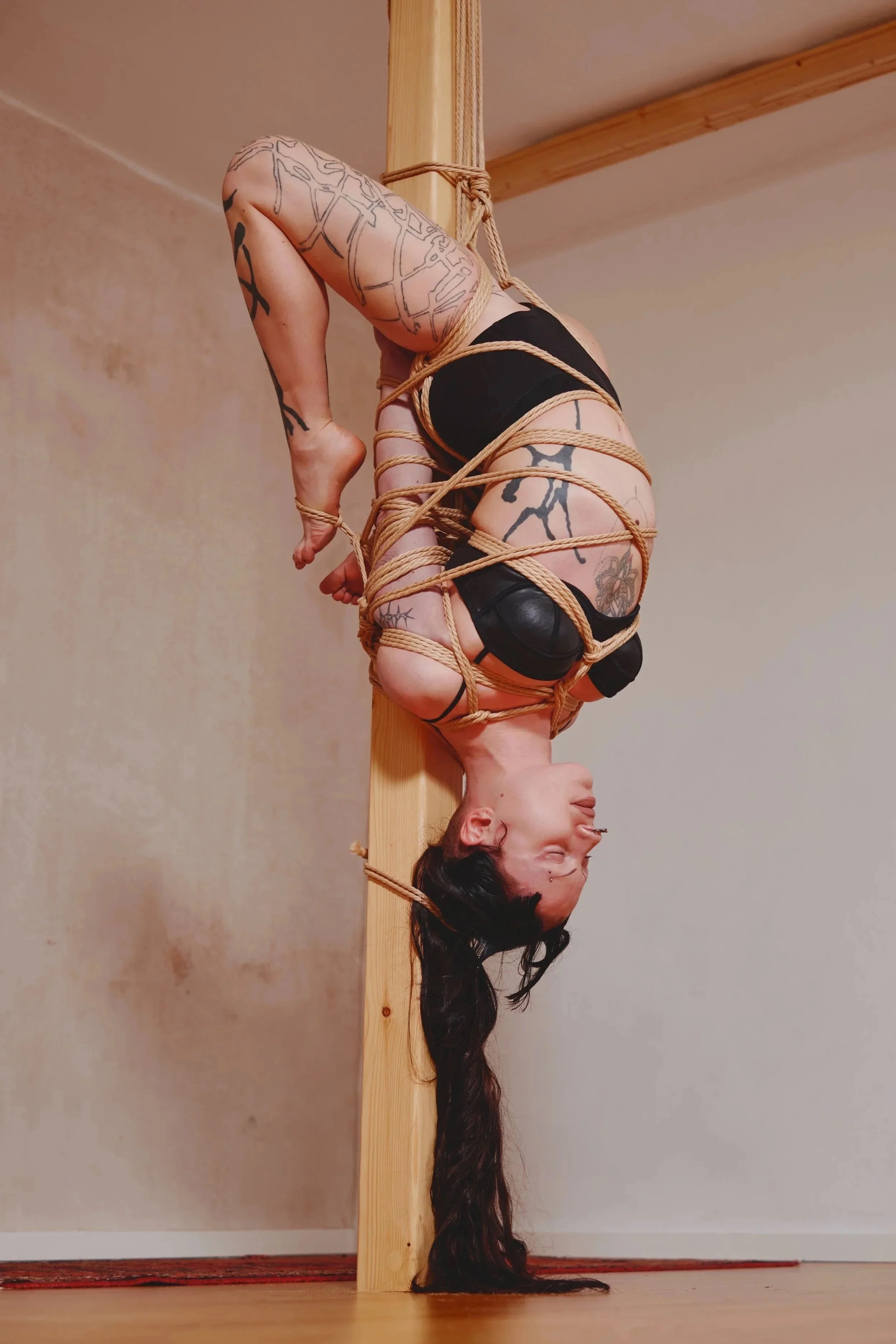
Model: MoirDiv / Picture: Harmony Shields
Hashira is often known for being restrictive and static: you lock in a shape and then come back down. Our approach leans into the hardness of hashira, while also treating it as a site for transition, where we find flow and movement between tying partners and the pole.
This class builds on the Intro to Hashira class, with a focus on full suspensions and inversions. You'll learn a range of shapes, techniques and harnesses unique to Hashira tying; we'll also cover safety considerations, and give options to adjust shapes to your skill and comfort level.
We will cover:
Techniques for managing multiple uplines smoothly on a hashira
How to tie someone into a hashira and release them for dynamic
movements around the poleAdvanced harnesses tailored for hashira suspensions
Methods to adapt these harnesses to different people and situations
Expansion of classic shapes and introduction of new forms
Guidance and suggestions for creating your own sessions and incorporating hashira into your play
Prerequisites:
For people being tied:
Experience being suspended upright, in inversions, and on a hashira
Ability to check for nerve damage in your hands and communicate if issues arise
Ability to communicate your feelings and limits
For people tying:
Prior experience tying on hashira
Ability to tie safe upper-body harnesses that work for your partner in both upright and inverted shapes
Ability to safely secure, open and adjust uplines in suspension
Clear, calm communication with the person you're tying, and awareness of your own limits as a rigger
Switching between two people is welcome in this class, but we recommend that you alternate between exercises as you will not have enough time otherwise.